Over the last months, we’ve been seeing an increase in stories on both the news and social media about how, as a result of the government’s crackdown on illegal immigration, USA Border Control has been massively ramping up its security measures.
We’ve heard stories of travellers being interrogated for hours, having their electronic devices searched or confiscated, and even of some tourists that have been detained for long periods of time.
Given that we have ourselves a trip planned to the USA later this year, we wanted to share with you a few ways to make your passage through US Border Control as smooth as possible when travelling to the USA in 2025.
Disclaimer: This is an article written by travellers for travellers, and has nothing to do with politics or with who you might or might not support.
Let’s get started.
Make sure your documentation is in order
The documentation required to travel to the United States as a tourist is overall pretty easy and straightforward.
The most important thing to know is that you’ll need a travel permit, such as a Visa or an approved ESTA (Electronic System for Travel Authorisation). Visas are required for citizens of most countries, and the type of Visa will depend on the nationality of the person applying. You can apply for a Visa by scheduling an appointment at your local US embassy.
The ESTA, on the other hand, is a process to determine whether you qualify for the VWP (Visa Waiver Program), but this is reserved for citizen from a restricted number of countries.
There are also limitations that apply depending on whether you have visited certain countries in the past (for example Cuba, Iran, Syria) or if you have a double nationality from said countries. If you are eligible, you can directly apply for an ESTA online.
It’s also important to know that, unless specified otherwise, your passport must also be valid 6 months beyond your date of departure from the United States.
Something else that seems to have been causing serious issues lately is the lack of a booked return flight and reserved accommodation for the duration of your stay. It’s also worth printing all of your reservations before your departure to the United States, so that you can have any relevant information close at hand in case you get questioned.
See if you can can go through preclearance
Preclearance is a process through which you get pre-approved for entry into the USA and arrive as a domestic flier, allowing you to skip TSA and customs controls on arrival.
The same documentation, security checks and questioning still apply, but are done before your flight. That way, at least you won’t have to travel all the way to the United States only to find out you are not eligible to enter the country.
Also, while you’ll have to set aside at least 30 minutes before your flight to pass security, you’ll save a lot of time once you arrive in the US, since you’ll be free to leave the airport directly upon arrival. This system is also beneficial for travellers with tight connecting flights.
Preclearance is only possible from 15 airports across the following countries: Canada, Bahamas, Bermuda, Aruba, Ireland, United Arab Emirates.
However, it’s important to know that, while preclearance grants you direct entry into the country, it does not entitle you to it. While rare, you can still be stopped and questioned by officers upon arrival, and you can still be removed from the United States if they deem it necessary.

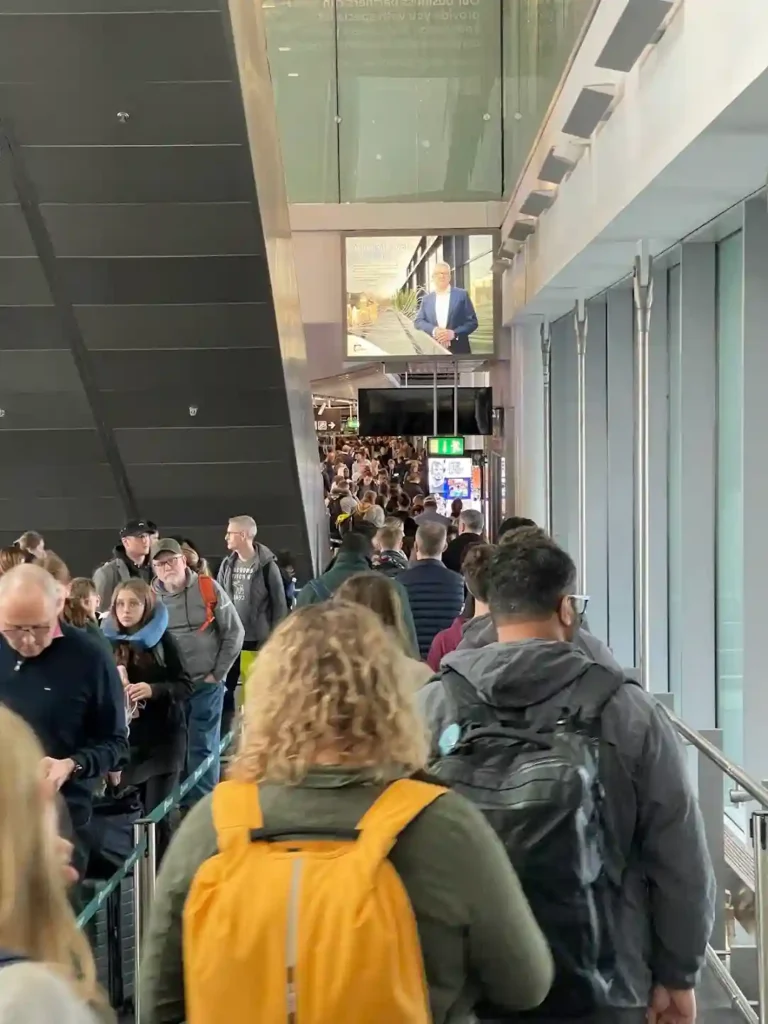
Know what is on your electronic devices
Something that’s been buzzing around socials a lot is that border agents have been checking people’s phones and laptops, going through their messages, files and social media.
While this sounds extreme, it’s also nothing new. Not only have they always had the right to do so, it’s not even something that is exclusive to the United States. As a matter of fact, agents in various countries across the world have the right to inspect your electronic devices if they have probable cause. What’s new is how often these searches are now happening.
So, what should you do?
You should be extremely mindful of what kind of information is stored in your devices. Things are tense in the US right now and whether or not you get past the border is entirely up to the discretion of the individual officer. Even something as minor as criticism or jokes about the current government could get your travel permit revoked.
Now, we’re obviously not condoning you having anything even remotely illegal on your phone or laptop, but if there is anything you believe might cause agents to be suspicious about you or your activities then you should delete it from your devices. The same goes for online searches, photos and social media activity. It even seems that listing your social media accounts is now a question when completing your ESTA, even though it’s optional.
What are your rights?
Well, pretty much none. You can refuse to provide a password and unlock your device, but the officer searching you also has the right to confiscate it and refuse you entrance to the country.
Do you have a long travel history?
If you move around as much as we do, you’ll probably have accumulated a pretty significant travel history and a good collection of stamps in your passport.
That’s pretty awesome, but it also might raise some eyebrows at the border.
You should be prepared to answer any questions officers might have about your travel history, such as where you stayed, for how long, with who and the reasons behind your trips.
Know that having previously travelled to North Africa and the Middle East, or to countries the US considers hostile such as Cuba and Iran, might get you heavily questioned.
Know your rights, but also when to comply
As we mentioned before, if you’re not a US citizen then your rights at the border are pretty much nonexistent.
You have the right to refuse to unlock your devices, to allow your bags to be searched and to refuse to answer questions but, at best, that will get you sent back home. In the worst case scenario, you’ll be detained for as long as they deem it necessary and then deported.
The best thing you can do is to avoid arguing and getting angry, and instead just stay calm, relax and comply with instructions.
Remember that all experiences will be different
Now, just because there has been an increase in border controls, that doesn’t necessarily mean you’ll get questioned and strip-searched the moment you step off the plane.
The number of people that report these incidents is still small compared to the thousands of travellers that arrive in United States every day.
Still, there is no denying that your ethnicity, employment and background all plays a role in whether or not you are allowed to enter the country, maybe now more than ever.
As for us, being frequent travellers and not having a typical job is definitely something border agents are on the lookout for, so at the moment we’re on the fence about whether we’ll postpone our trip. For the time being, we’ll keep an ear to the ground and see how the situation evolves.
What about you, are you planning on travelling to the USA in 2025? If so, are you still going?