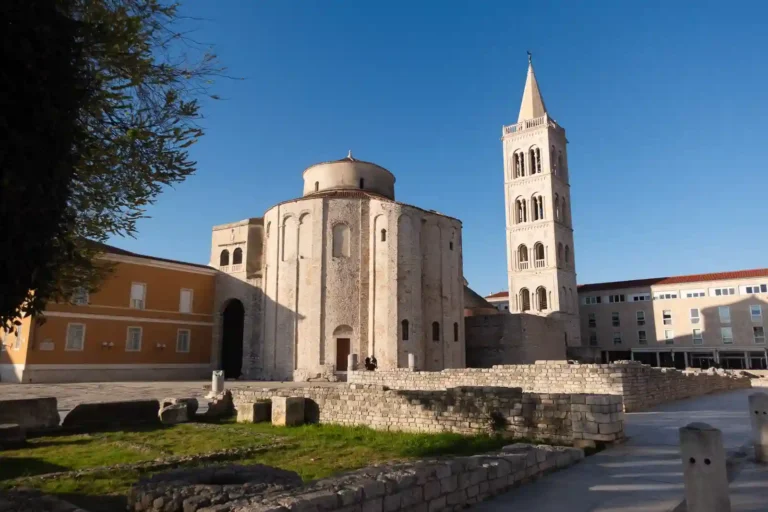
Zadar is a small city on Croatia’s Dalmatian coast, and the first stop on our itinerary through this Balkan country.
With beautiful, crystal clear waters, charming medieval streets and steeped in history, Zadar is a calm and quiet destination that is perfect to visit all year long.
We spent a week there, taking our time to enjoy and explore this fascinating city. In our Zadar travel guide we’ll share with you what our overall experience was like, along with our pros and cons and a few useful tips that can come in handy when planning your visit.
Let’s get started!
The best way to reach Zadar off-season
Zadar’s airport is really small, and only receives flights from a limited number of destinations, and even less outside of the summer months.
Chances are, if you’re travelling off-season, that you’ll have to make a couple of detours to get there; in our case, we travelled to Croatia in the beginning of April from Lisbon, Portugal, and passed through London Stansted with a short layover before continuing to Zadar.
If you can’t find any good options for a flight, an alternative route we recommend is flying to either Zagreb or Split. Both cities have larger international airports that are better connected, and from either you can reach Zadar with a direct bus that will take between two and half to three hours to get there. What’s more, Zadar’s bus station is fairly central, and is only a 20 minute walk away from the old town.
What’s good about Zadar’s airport is that it is located close to the city, only a 20 minute drive away. There is a bus service that connects to the city, but if you’re travelling with multiple people it might be more affordable to use a car-sharing app such as Uber or Bolt.

Exploring Zadar’s charming old town
At first glance, you might think Zadar doesn’t look too impressive.
It’s a very clean and residential city, just fairly plain-looking and with not a whole lot to see. With that said, just wait until you get to the old town, because that’s the real reason Zadar is absolutely worth visiting! The old town is located on a small peninsula that juts out from the middle of the city’s coastline, just in front of the main harbours.
As a testament to Zadar’s incredibly long history, it is still partially surrounded by an ancient wall. Inside, you’ll wander through a small maze of medieval streets that are very reminiscent of Venice, a reminder of the on and off Venetian occupation of Zadar.
There are also several parks that provide some lovely shade during the hotter days, and several ruins, gateways and columns scattered throughout, some dating all the way back to Roman times. The one we found the most impressive is definitely the Terraferma Gate, a stunning decorated Venetian entrance to the old town.
If you make your way to the water front, you’ll come to our favourite spot in the city, Obala kralja Petra Krešimira IV, the Coast of King Petar Krešimir IV. This stone seaside promenade extends throughout the length of the old town, and is the spot to go to really experience how incredible-looking the water can be in Croatia.
It’s so transparent, you can see pretty much all the way to the sea floor, and you can often spot small to medium-sized fish darting around. It’s also perfectly safe to swim, and there are ladders located at interval throughout the promenade to allow swimmers to get in and out of the water.
This really was our go-to spot, and we would often pick up breakfast at our favourite bakery and eat on a bench or by the water’s edge, enjoying the sun and the peaceful sound of the waves crashing against the pier.
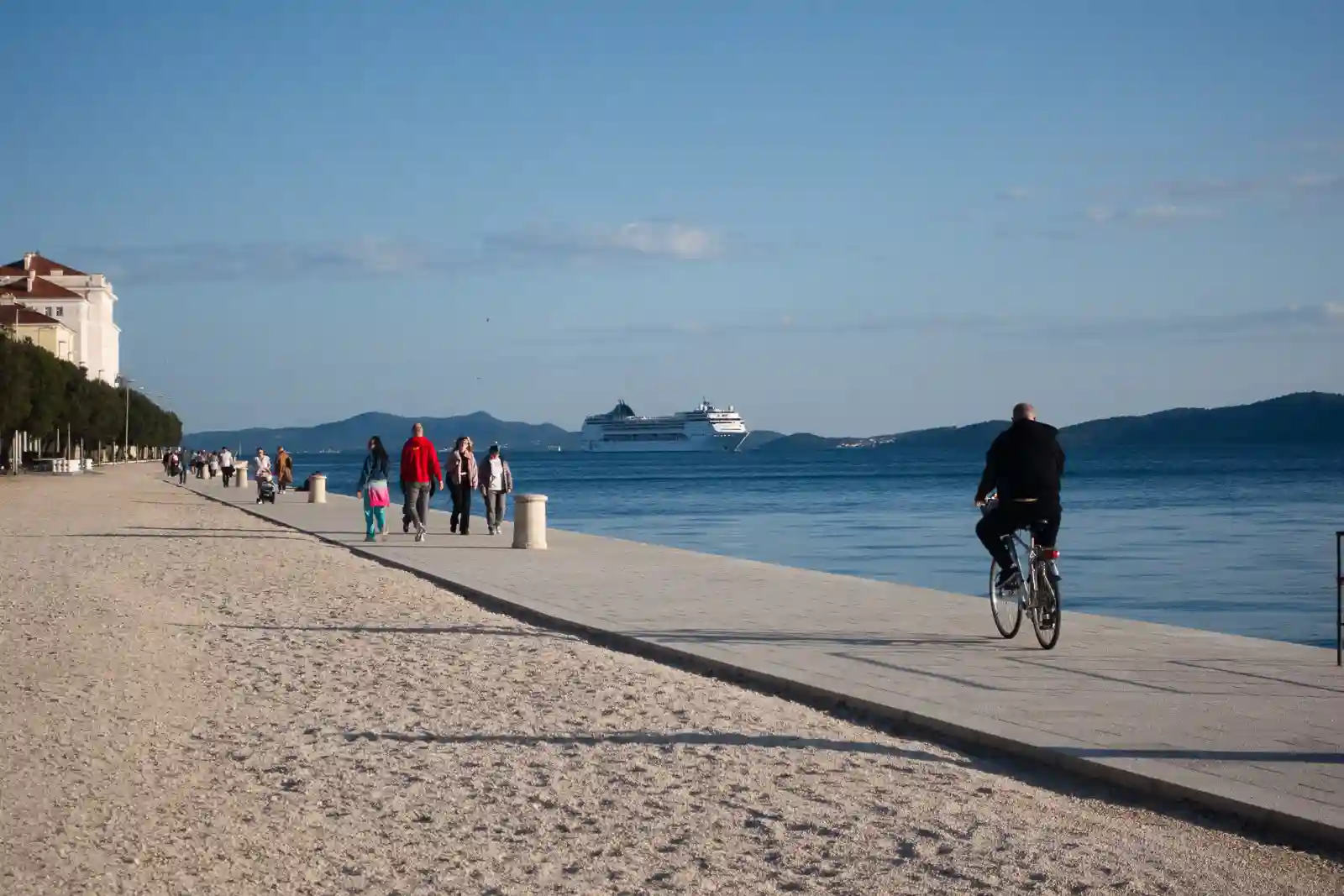
If you continue walking up the promenade, you’ll eventually reach one of Zadar’s most famous locations, the Sea Organ.
This art piece is located under a series of marble steps, and uses a combination of pipes and the impact of sea waves to act like a sort of natural musical instrument. The sound it emits is not exactly melodic, but it’s surprisingly pleasant and relaxing to listen to, and fascinating when you stop to think about the engineering effort that must have gone into producing this work of art!
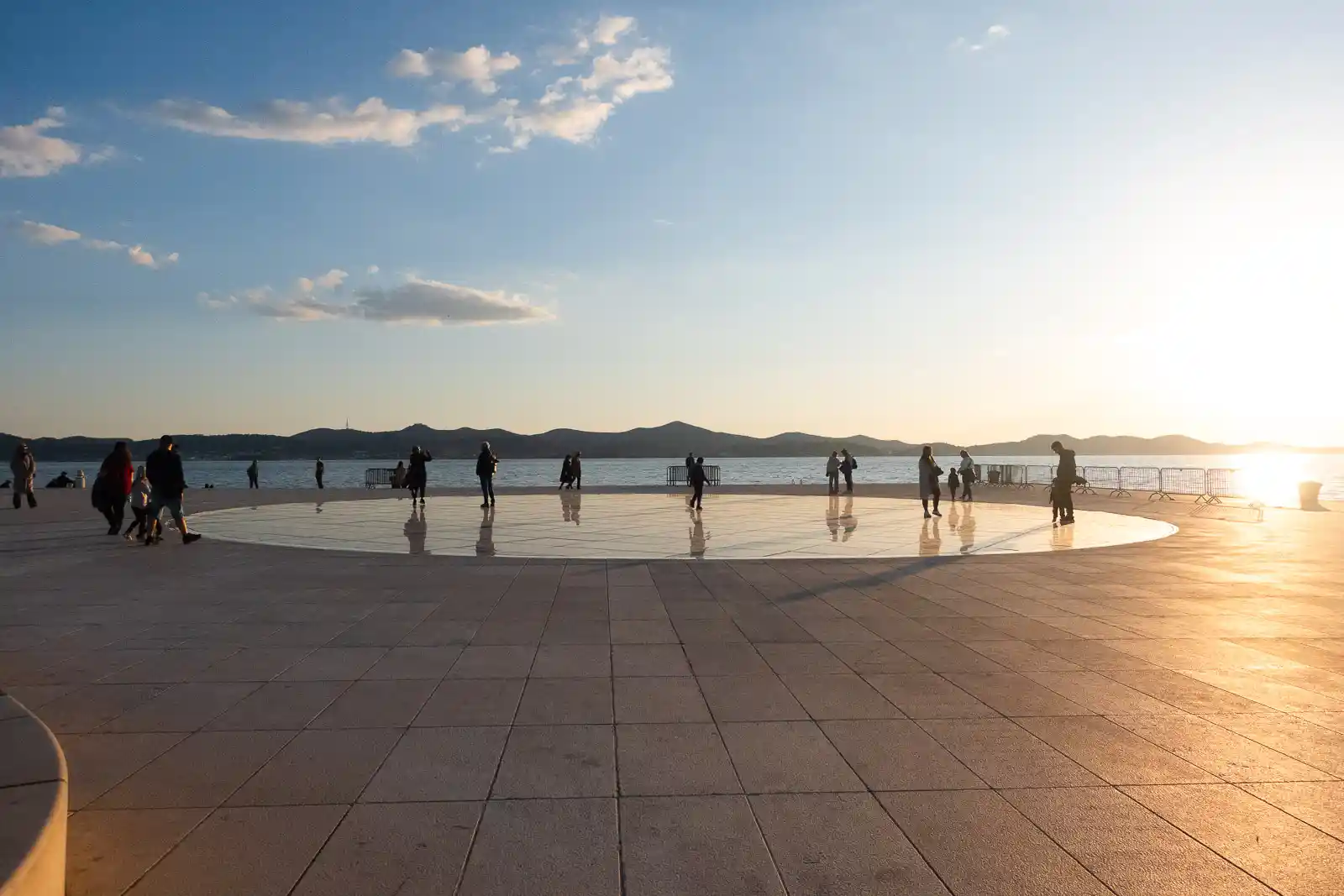
Near the Sea Organ, you’ll also find the Monument to the Sun, a large circle of glass panels that lights up at night and provides a mesmerising light show. Interestingly, the main circle represents the sun, while the small ones near it represent the planets in scale.
Eating out can be really pricy
As is unfortunately the case pretty much everywhere in Croatia, eating out in Zadar can be quite a bit pricier than most other destinations in southern Europe.
The average price for dishes is around €15 to €20, so for a two-person meal with drinks expect to spend a minimum of €40 to €50.
A good way to keep your budget in check during longer stays in Croatia is to book an apartment with a kitchen. While these will generally run you a little more than a hotel room, we calculated that eating out two to three times a day for the entire duration of our week-long stay would eventually end up surpassing the entire cost of our accommodation.
Shopping for groceries at low-cost supermarkets such as Lidl is another good strategy to keep your vacation from going over-budget.
With that said, you can still find budget eateries selling delicious and affordable snacks. These are two of our go-to places to grab a delicious bite to eat by the waterfront:
- Richard Gyros and Sweets, a super local spot near the harbour with great gyros wraps and fries.
- Crazy pizza, an eatery close to the old town’s water front that sells huge pizzas either whole or by the slice at very decent prices.
Take the ferry to visit the nearby islands
With a huge number of islands located not far from the coast, Zadar is a great place from which to island-hop and explore the archipelago.
Most boats depart from the harbour behind the old town, while the larger Zadar Gaženica pier is mainly used by car-carrying ferries.
One thing to keep in mind, however, is that many ferries only run during the high season or operate on a reduced schedule throughout most of the year, which greatly limits access to the majority of the islands outside of the summer. Still, we managed to catch a ferry and reach Ugljan, the closest major island to Zadar. After a 25 minute boat ride, we disembarked in the town of Preko, from where we spent a day hiking and exploring the island.

A highlight of our visit absolutely was Fort Saint Michael, an old Byzantine stronghold located at the end of a 2.3 mile hike (3.8 km). The trail is mostly asphalted and easy to walk, but does become very steep and can make for a pretty intense workout. Overall, it took us a little under two hours to reach the fort, and around 45 minutes to get back down to town.
What’s fascinating about Fort Saint Michael is that it is was bombed into ruin during WW2, and was subsequently pretty much abandoned to the elements. It’s worth going in for the absolutely spectacular view from the top but, since falling from the top of the walls is a very real and possible danger, you should enter at your own risk.
Zadar was our favourite Croatian destination
Throughout our time in Zadar, we were amazed by the sense of peace and calmness that surrounded us.
Sure, we did visit during the low season, but we can’t imagine it getting that much busier during the summer. It’s an incredibly relaxing destination that is ideal for families, slow travellers and nomads looking for a good hub from which to work and explore the surrounding region.
That’s because Zadar is extremely well connected to the rest of the country via bus connections, and its central location on the Dalmatian coast puts in range of most large Croatian cities, such as Rijeka, Zagreb, Split and even Dubrovnik.
Zadar is also a great launching point if you’re looking to explore Croatia’s wild nature and national parks.
If you rent a car you can reach the famous Plitvice Lakes National Park in just an hour and a half, while Krka National Park is under an hour drive away.

The only thing that Zadar lacks is nightlife. The city actually gets pretty quiet at night and there’s not much in terms of clubs or party scenes. If that’s what you’re looking for we recommend heading further down towards Split, where you’ll find a much younger and more vibrant nightlife.
All in all, we absolutely loved our time in Zadar!
We thoroughly enjoyed the slow pace, from buying breakfast from the bakery in the morning and enjoying our coffee and the sun by the water’s edge, to endlessly wandering through the small streets of the old town.
It’s a destination we’ll surely be returning to when we need a place to crash, relax and get some work done.