
Rome, The Eternal City, capital of Italy and of the former Roman Empire.
With a history and culture spanning over 2000 years, it is one of the most popular tourist destinations in Europe, attracting millions of visitors every year.
With such a rich history, and sights like the symbolic Colosseum, the Pantheon and the Trevi Fountain, it is impossible to see all the city has to offer in only one visit, and it can be overwhelming to decide what to include in the bucket list and what to leave out!
So, to help you organise your trip, here’s a Roman’s pick of the top sights that you absolutely must include in your first visit to Rome!
(Don’t forget to download our Bucket List Free PDF at the bottom of this article!)
The Roman Forum

Located only a few minutes away from the Colosseum, the Roman Forum is an archeological site housing the ruins of the ancient city centre of Rome, and sits high on the list as my favourite sight in the city!
Starting as a marketplace, it rose over the centuries as one of the main gathering spots of ancient Roman society, where they would meet for events such as business, religious ceremonies and victory parades.
Here you’ll see the remains of temples, government buildings, palaces and ancient roads, and because of the preservation and history of the site, a walk through the Forum is as close as one can get to a walk through Ancient Rome!
Palatine Hill
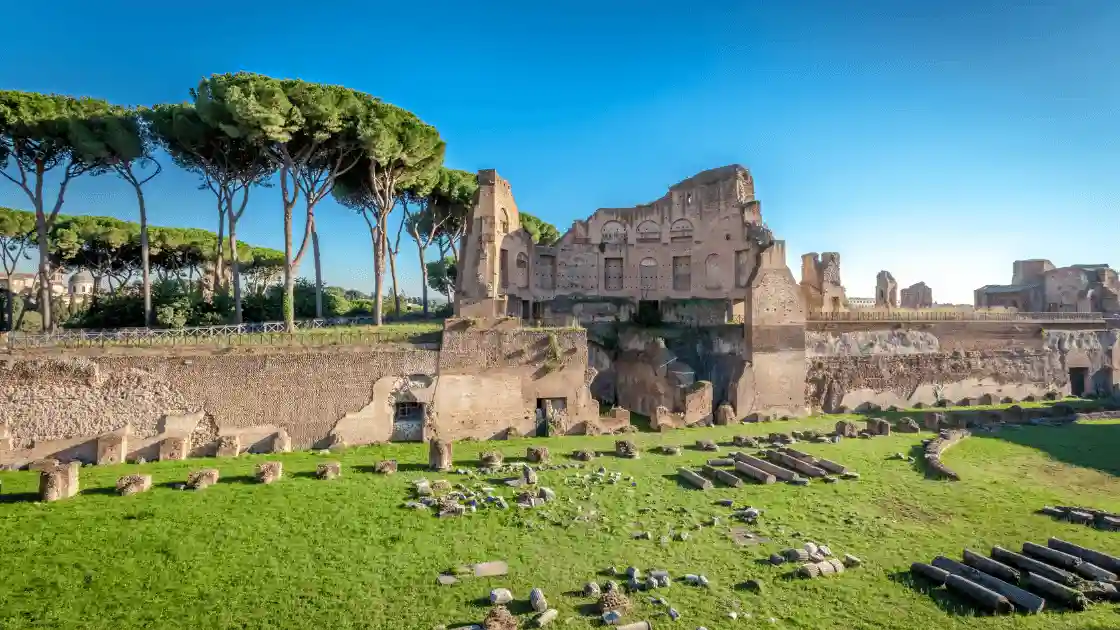
Adjacent to the Forum is the Palatine Hill, one of the Seven Hills of Rome and, as supported by several archeological excavations, the birthplace of the city itself!
It is now a beautiful open air museum, where one can walk through the remains of several imperial villas and temples. Also, because it is directly connected to the Forum, the two can be visited with a single ticket.
Castel Sant’Angelo
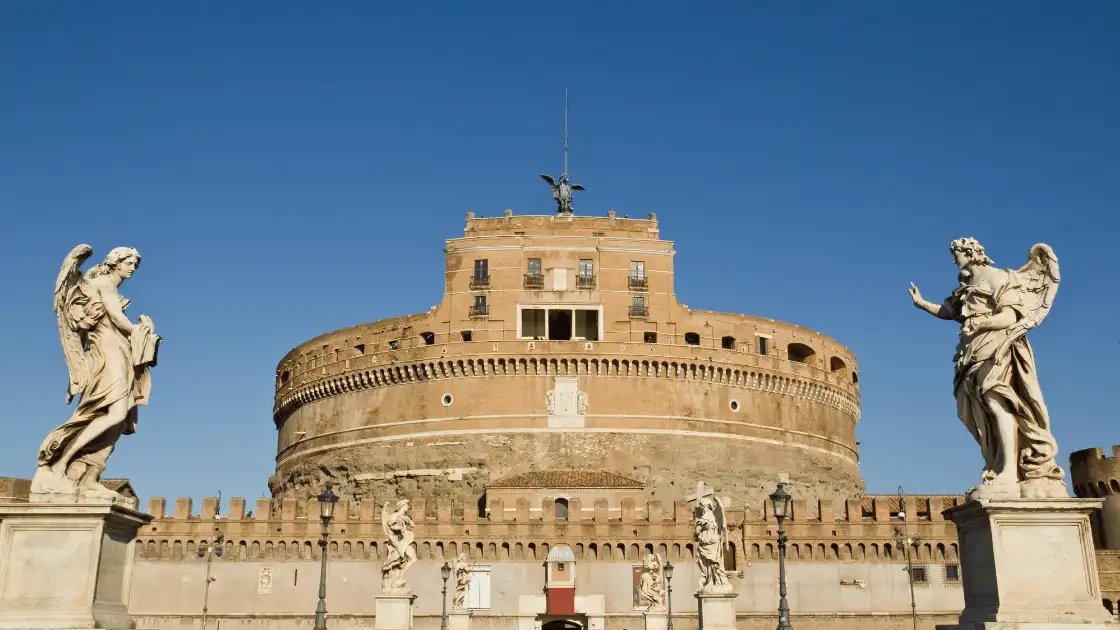
The Mausoleum of Hadrian, now known as Castel Sant’Angelo, is a large circular structure located just 10 minutes away from St Peter’s Square.
Once a mausoleum commissioned by Emperor Hadrian in 134 AD, and then a residence and fortress for the Pope, it was at one point the tallest building in Rome, and offers one of the most stunning views of the city!
In front of the castle is the Ponte Sant’Angelo, a bridge that was also commissioned by Emperor Hadrian, and is adorned by statues of angels created by various sculptors in the 16th Century.
Inside you’ll find a museum showcasing several artefacts from the Papal period, like armours, weapons and refurbished rooms. The view from the windows and from the top of the castle is amazing, allowing you to see almost the entirety of the city!
You usually won’t find too many people in Castel Sant’Angelo, so it’s a good location to visit if you don’t want to wait in line or just want to escape the crowds.
Colosseum
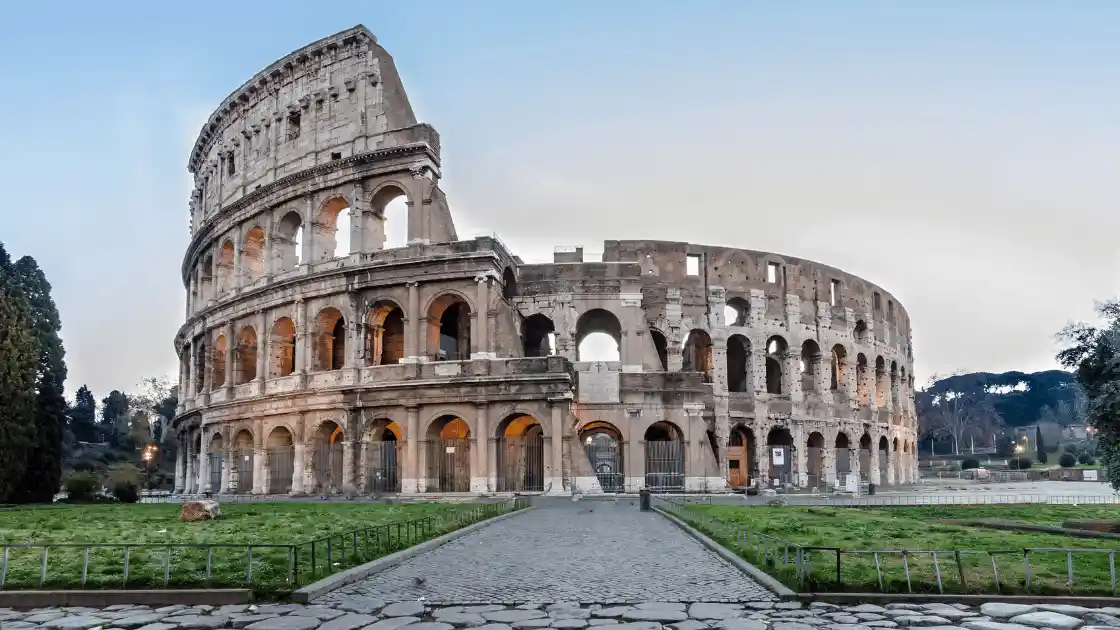
Without a doubt the most recognisable and well known site in Rome, the Colosseum has to be part of your visit!
The structure was built for entertainment purposes, hosting gladiatorial combat, theatrical performances and executions (believe it or not, that was considered entertainment). This tragic side of the Colosseum is often forgotten, even though it housed the slaughter of thousands of people over the years, along with countless animals.
Because of this reason, visiting the inside can be a heavy experience. Most people just run around the place snapping selfies, but I would invite you to take a moment when inside to reflect on the what the Colosseum was used for, and the sheer loss of life that was caused for the sake of entertainment.
Pro tip
Did you know you can skip the main line at the Colosseum?
Here’s a little trick if you haven’t pre-booked your ticket yet:
Instead of buying one at the Colosseum, go to the ticket boot at the entrance of the Roman Forum, less than 5 minutes away.
The lines there are much shorter, and you can buy a “24h – Colosseum, Forums and Palatine Hill ticket”. It will give you one access valid for 24h to all three sites, without having to spend hours to buy a ticket for each.
Baths Of Caracalla
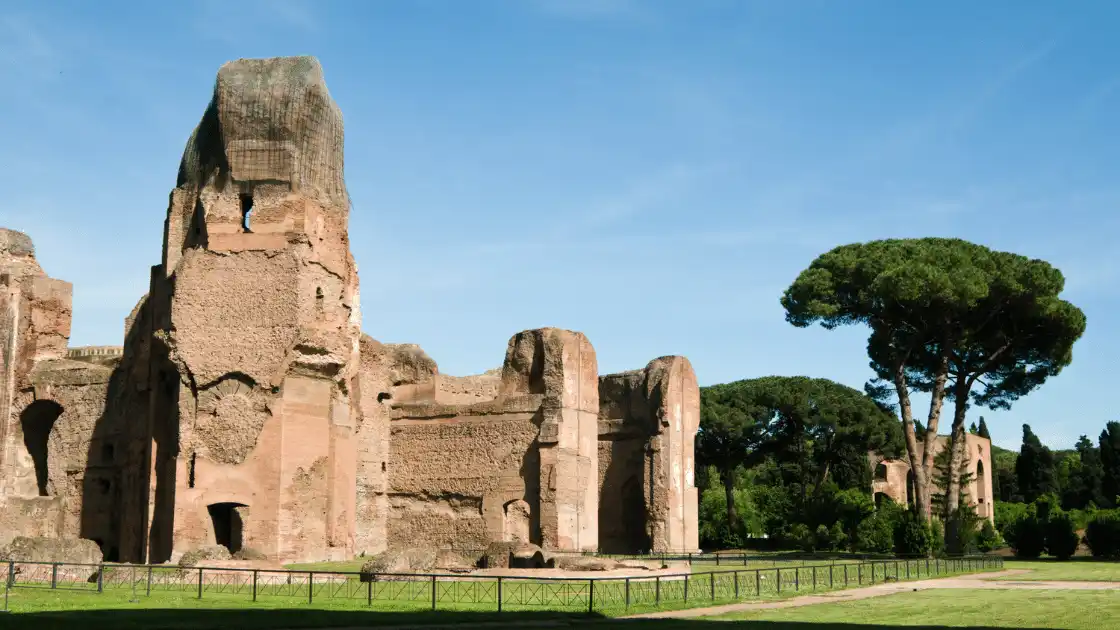
The Baths of Caracalla were one of the largest public baths in Rome, and a central part of Ancient Roman Society.
They are located about 1 km from the Colosseum, so they can be easily reached on foot or by metro (exit at the Circo Massimo stop).
The size and architectural style of the baths is impressive to say the least and, like the Forum and the Palatine Hill, a walk through these ruins really gives a sense of what daily life might have been like for Ancient Romans!
The Pantheon
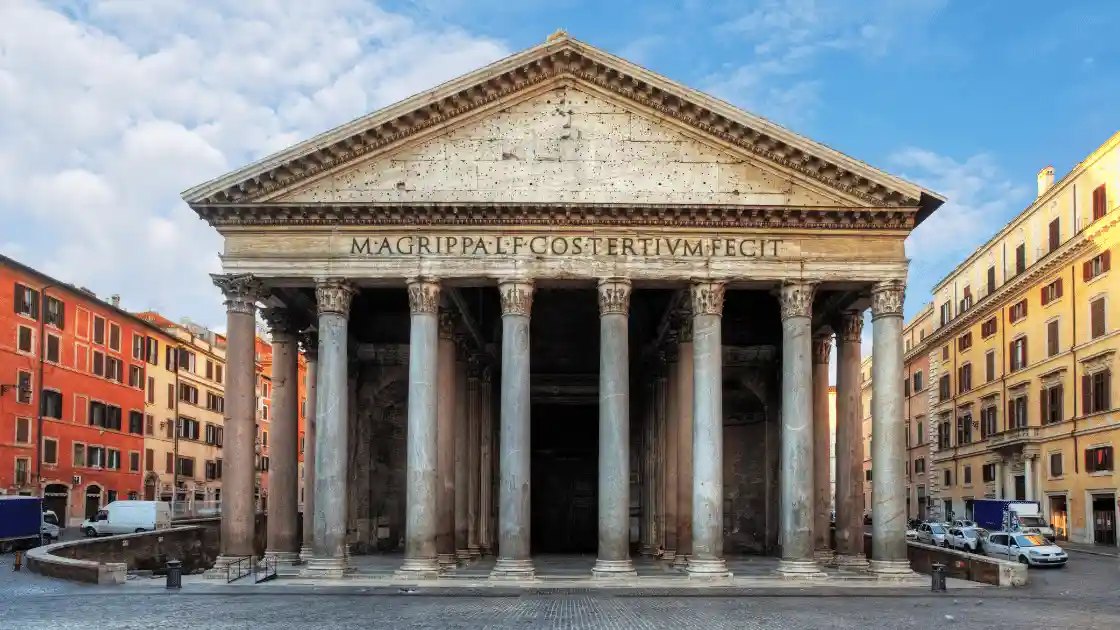
This former Roman temple is one of the best preserved ancient structures in the city.
It is also beautiful decorated on the inside, adorned with statues and paintings, and housing the remains of, among others, the painter Raphael and King Victor Emmanuel II, the first king of Italy.
It is now a Catholic church, meaning that there are some rules to follow or you won’t be allowed in. These rules include, among others, having to cover your shoulders and legs, as well as not being allowed to bring any food or drinks.
St Peter, the Vatican Museums and the Sistine Chapel
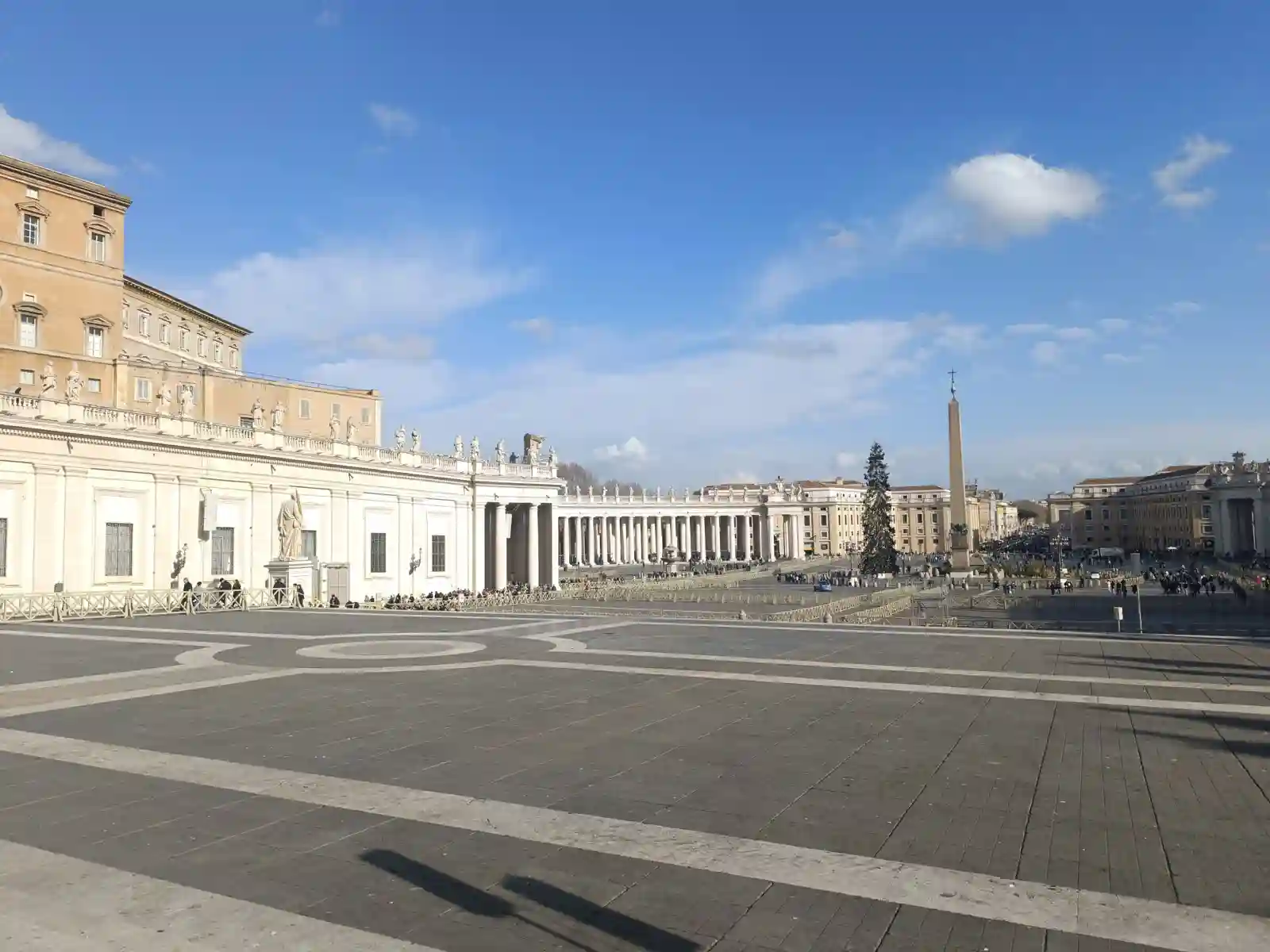
This one is without a doubt already on your list, and rightfully so!
The Basilica and square of St Peter are so iconic I don’t think I really need to say more.
The Vatican Museums and the Sistine Chapel house some of the most famous Renaissance paintings in the world, and of course Michelangelo’s masterpiece.
Remember that the same rules for the Pantheon apply to both the Basilica and the Museums, and security is even more strict.
If you want to take your chances, the entrance to the museum is free on the last Sunday of each month. Just remember that the lines here are some of the longest in Rome, so I would recommend you get your tickets beforehand.
Piazza Navona and Palazzo Braschi
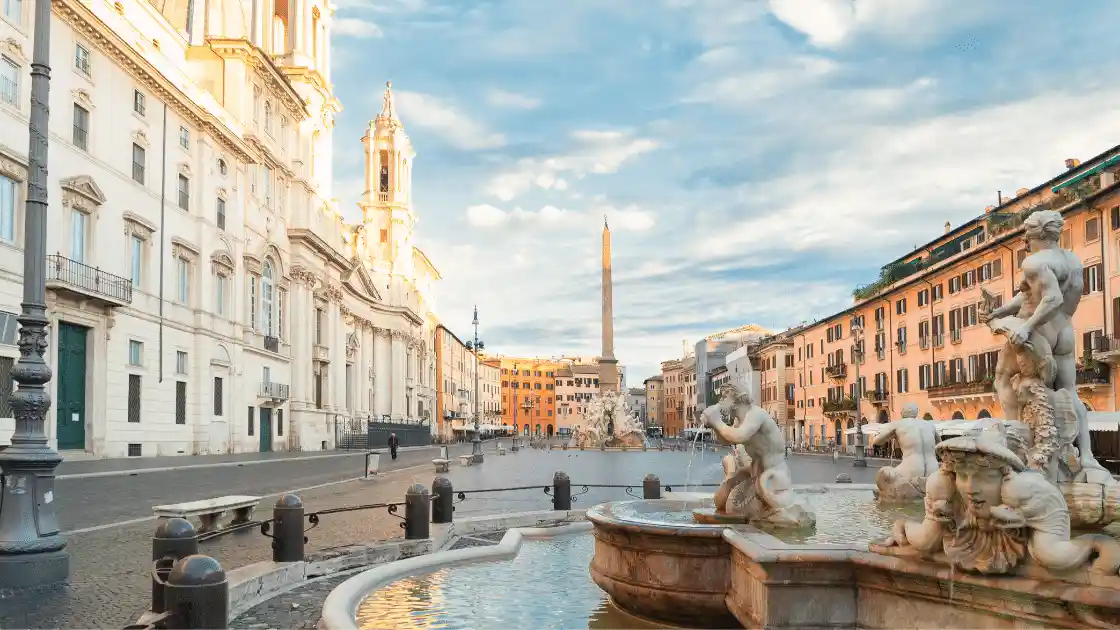
This lovely square, located not far from the Pantheon and the Trevi Fountain, is one of the most beautiful in the city. The main attraction is without a doubt the Fontana Dei Quattro Fiumi, by the artist Gian Lorenzo Bernini.
Right behind the square is the Palazzo Braschi, a large palace that houses the Museum of Rome. The palace is quite beautiful and the museum itself not very impressive but, from its windows on the top floor, you can get a unique view of Piazza Navona from high above!
Piazza Venezia and Il Vittoriano
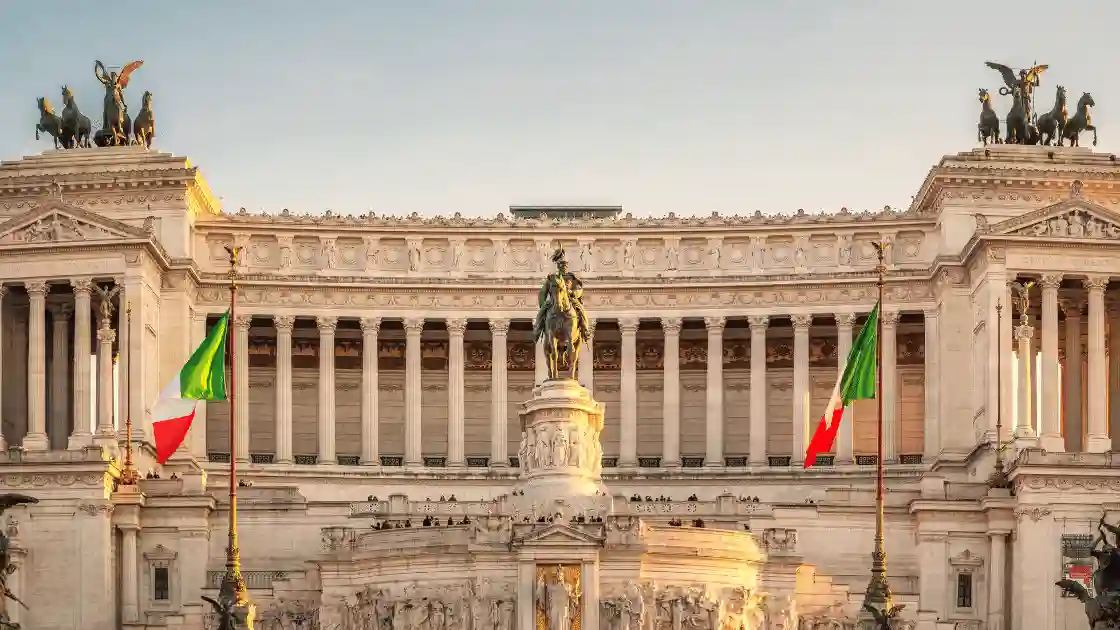
On your way to the Colosseum you’ll likely pass the bustling Piazza Venezia.
This is a huge intersection of the major streets of the city, where drivers seem to be on a suicide mission, and a gigantic white structure, Il Vittoriano (or the Cake, as some Italians call it).
This building began construction in 1885 as an homage to the Unification of Italy and in honour of its first king, Victor Emmanuel II, and holds the remains of Italy’s Unknown Soldier, a WW1 unknown casualty who represents all who died for the country.
The structure still creates debate among Romans, with many finding that it is too modern and stands too strongly against the backdrop of ancient sites like the Forum and the Colosseum. I personally find it a beautiful, even if admittedly contrasting, addition to the landscape of Rome!
Trevi Fountain

The Trevi Fountain is another one of the most recognisable sights in Rome, that is if actually get to see it through the ever present crowd.
I would suggest visiting the fountain off-season or very early in the morning so you can appreciate the view and perhaps throw a coin in the water, as legend has it will ensure your return to the city.
Piazza di Spagna, the Spanish Steps and Trinità Dei Monti
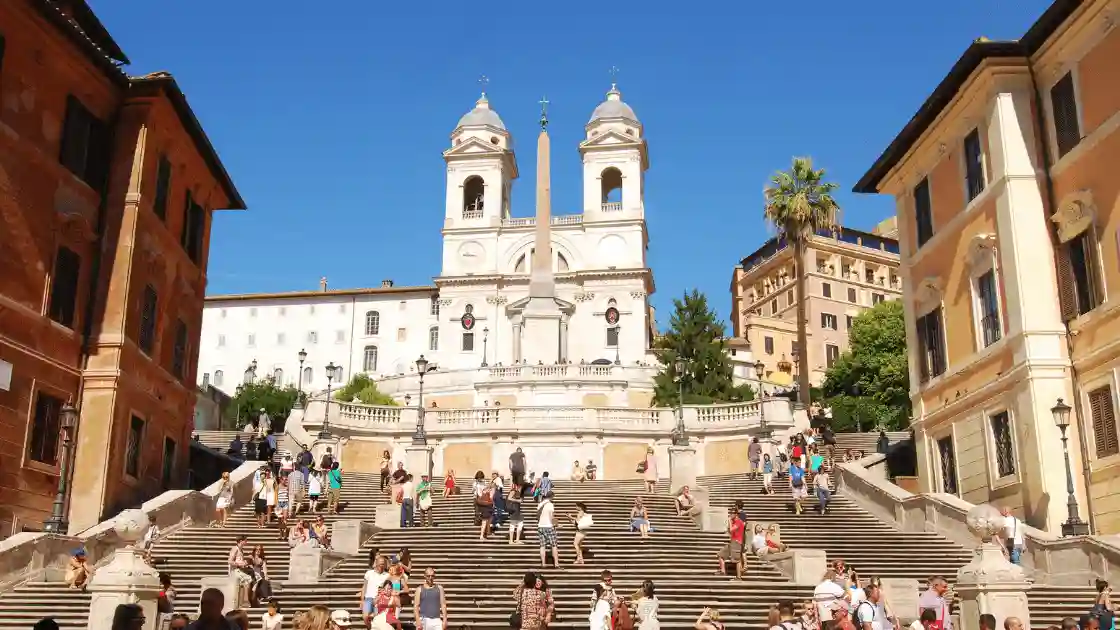
Piazza di Spagna is one of the places in Rome I have the most memories about, as it is smack on the way from my grandmother’s house to centre.
Apart from the Barcaccia, the beautiful fountain created by Gian Lorenzo Bernini and his father, this world famous square is not as visually impressive as other locations in the city, but it makes up for it with a great atmosphere, closeness to one of the main shopping areas of the city and the beautiful steps leading to the Trinità Dei Monti Church.
Piazza del Popolo and Porta del Popolo

Piazza del Popolo is a large square located just a few minutes away from Piazza di Spagna.
The most recognisable features are the Obelisk of Ramesses II in the middle of the square and the twin identical churches on the sides of Via del Corso.
On the opposite side is Porta del Popolo, a massive gate in the Aurelian Walls that was once passed by the ancient Via Flaminia. Don’t forget to look at it on each sides, they are both completely different!
Villa Borghese and Il Pincio
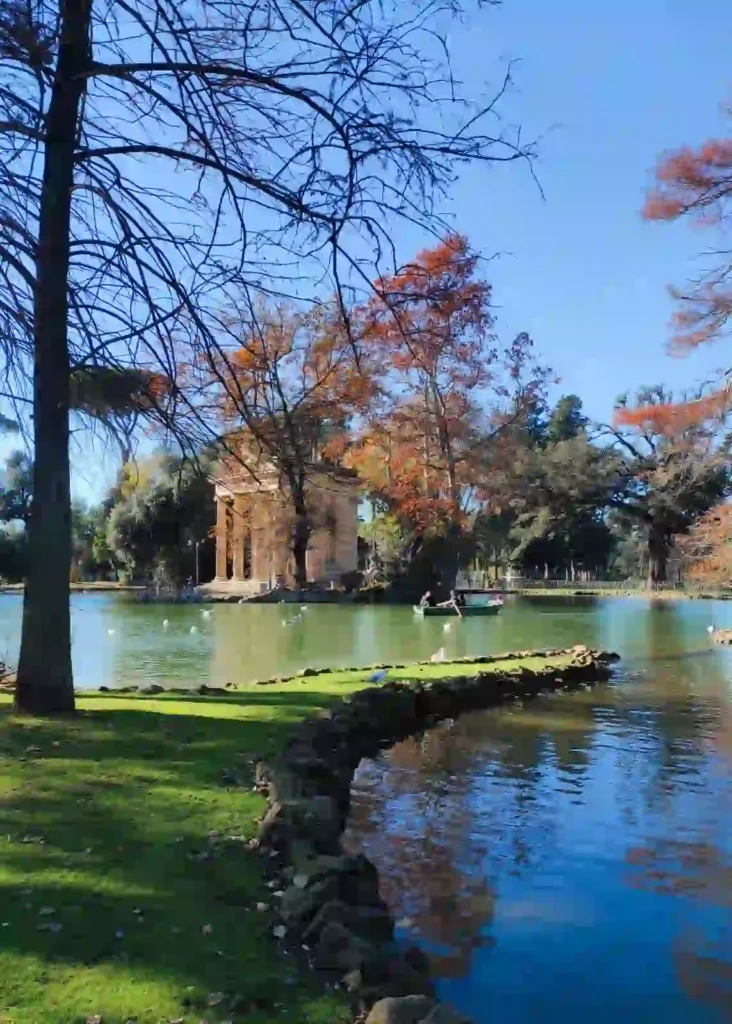
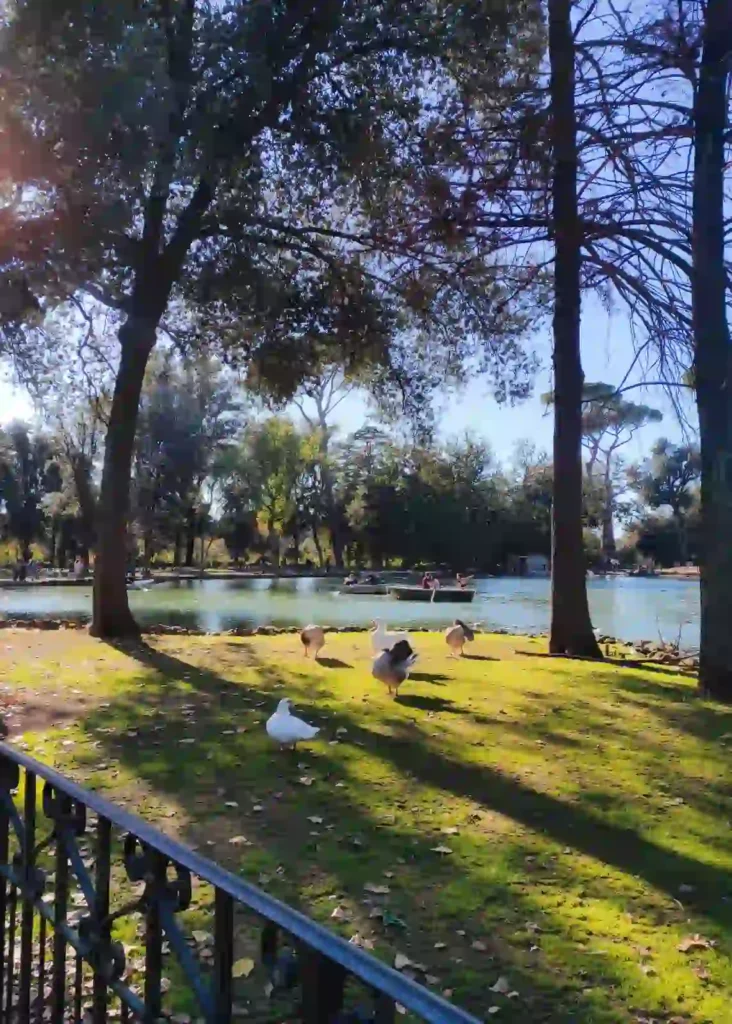
From Piazza del Popolo you can take the staircase going up the hill to reach the Pincio, a hill overlooking the square that offers another beautiful view of the city.
Behind the Pincio is Villa Borghese, one of the largest parks in the city. It’s the perfect place to escape from the crowd and relax or take a walk in the shade. Villa Borghese also houses several statues, buildings and museums most notably the Galleria Borghese.
If you’re visiting with children, you might be interested to know that there is even a large zoo on the other side of the park, only 15 minutes away on foot from the Pincio!
And there you have it, our top sights that you can put on your bucket list for a first visit to Rome!
I hope this post will be help you with your planning, and that it will make your visit even more memorable.


