In the mood for a real adventure?
If you’re tired of spending your outdoor time on a camping ground, you might want to give wild camping a shot. It’s the best way to immerse yourself in the peace and quiet of nature, just you, a tent and the wilderness around you.
But before you run off to gather your gear, let’s first see how you can choose the perfect wild camping destination for you, as well as the best places to set up camp.
Disclosure: This article contains affiliate links, and as Amazon associates we may get a small commission from qualifying purchases. We believe in only advertising products we trust in and use ourselves!
Can I camp here?
Wild camping requires a little bit of planning to go into it, and goes beyond choosing the least expensive tickets or the current hottest destination.
Wild camping is not allowed everywhere, so the first thing to do is getting informed on what the law is for your destination. In Europe, for example, different countries have different attitudes when it comes to this activity:
- Some, like Norway, Sweden and Finland have a concept of “Everyman’s Right” (Right to Public Access in Finland), which declares that every natural space is open to roaming and camping. There are of course some exceptions and rules, but this essentially means that most green areas and national parks are open to wild camping.
- Other countries, like France, prohibit wild camping but also tolerate it to a certain extent, depending on who you’re caught by and how close you are to urban areas. You should be ok as long as you’re nowhere near farms, towns and villages, away from paths and roads, and pack up early in the morning.
- On the complete opposite side you have countries such as Germany, Austria and Switzerland, where wild camping is not only discouraged, it is actively punished by law. Getting caught here will certainly mean a big fine.
Do your research and stay on the right side of the law. These rules are usually meant for the protection of the natural environment or to defend public property, so respect them!

The terrain
The next step in choosing your destination is taking a look at what kind of landscape you should expect.
This is especially important when planning where you’ll be setting up camp.
When I camped in the Hardangervidda National Park in Norway, the terrain proved to be of no issue when looking for a good camping spot. It was for the most part a barren moor, which left plenty of space to pitch a tent.
However, when in 2019 we visited Loch Lomond National Park in Scotland, things were a little different. Scotland allows wild camping, but with the exception of so called “camping management zones”. In this case, these zones focused on the area around the edge of the lake, meaning that the available locations were on the heavily forested hills around.
This made finding a good camping spot much more difficult, as the vegetation not only limited the free space on the ground, it made getting away from the trail a real problem!
Make sure that you’re also prepared for the physical challenges that the environment will throw at you.
Are there any major changes in elevation, does the trail cross any bodies of water, are there any dangerous obstacles on the way?
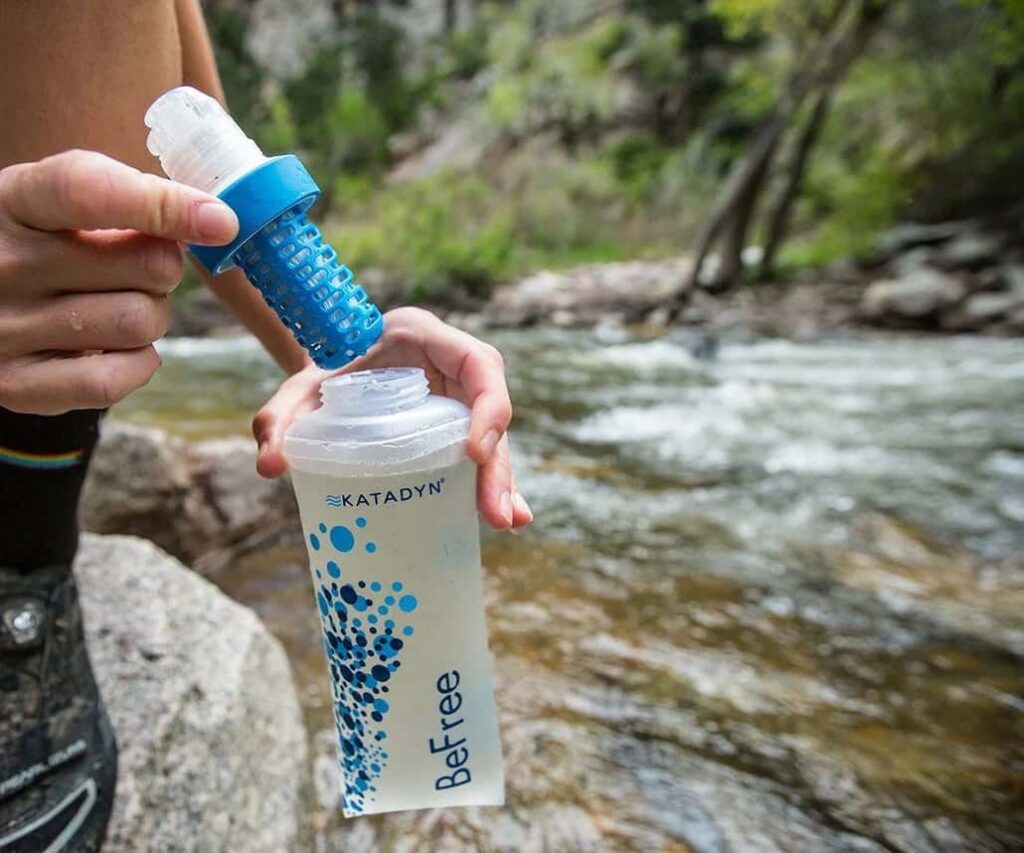
Finally, choose your route and campsites carefully to make sure that fresh water is available nearby. If that’s not possible, make sure you can carry a few extra liters with you. I would recommend you take a good water filter and, if you need to, a spare reusable bottle or a hydration bladder!
Other people
It can a be a bummer to reach a destination you’ve been looking forward to visiting, only to find it covered by giant crowds.
Nothing can take you out of experiencing wild nature quite like having to slow down in line on a narrow path or seeing groups of tents all over the place.
Research how popular the area you have chosen is and, if possible, try to visit off season. You’ll be able to enjoy yourself more and you’ll give the environment a bit of a break as well.
Another option is to choose a more remote area, where the likelihood of meeting people is smaller. It’s ideal if you’re looking for some peace and quiet, but remember to be extra careful with planning! You’ll be completely on your own, which means no quick help if something goes wrong.
People can also be an issue when camping too close to cities or in public parks. I’ve heard plenty of stories from other wild campers and nomads who were harassed or robbed after setting up their tents in sketchy areas. If you’re very close to an urban centre always go with your gut, try to stay out of sight, and if something feels off just leave!
Wildlife
The number one rule of wild camping is to leave no trace. This also relates to any animals living in the area you’ll visit!
Get familiar with the local wildlife. Are there any animals you could bother during important times, such as mating, nesting or birthing season? Remember that you are a guest in their home, so make sure that your trip won’t disturb them.
Don’t forget to also research any dangerous wildlife that may live in the area. Do you know how to behave in bear country, or how to deal with snake bites?
Do your homework so you’re not caught unprepared in case of an unwanted encounter!
Being well prepared is key to a fun wild camping trip!
Don’t forget to check out the rest of our articles on the outdoors and wild camping for extra tips on locations, gear and much more.
So, what is going to be your next wild camping destination?
Can’t find the answers to your questions anywhere? Just drop us a message and we will make sure to help you out!